A UX Research Case Study
Understanding Expiration Dates on Consumer Products: Investigating Human Factors for Improved Labeling Design

What is this Research about?
The project objective is to investigate the human factors influencing consumer comprehension of expiration dates, encompassing cognitive, perceptual, and ergonomic elements contributing to misinterpretation. Through a comprehensive research approach including observational study, controlled experiment, and user surveys, the goal is to enhance consumer understanding, minimize health risks, and reduce product waste associated with expiration dates. This research aims to inform industry practices, regulatory standards, and design strategies to promote safer consumer choices and contribute to the broader goal of food waste reduction.
Role
UX Researcher
Methods
In-depth Interviews
Online surveys
Timeline
August 2023 - December 2023
Research Process
Research Questions
What perceptual challenges do consumers face when interpreting expiration dates, and how do these challenges impact their decision-making?
Additional Research Questions
-
How do consumers interpret and understand expiration dates, including "best by" or "use by" labels, on consumer products?
-
How can consumer understanding of expiration dates be improved to minimize health risks and reduce unnecessary product waste?
Background & Motivation
The understanding of food date labels has been extensively studied, yet certain gaps persist in our comprehension. Specifically, there is a dearth of research on how cultural contexts influence date label understanding, as well as a need to develop labels tailored to vulnerable populations, such as older adults and low-income households, who may struggle with label confusion. Additionally, the integration of smart labeling technologies into food packaging has garnered interest, promising real-time guidance on food safety and quality based on factors like temperature and storage conditions.
The identification of research gaps underscores the necessity for a user-centered approach, aligning with the principles of User-Centered Design (UCD). By prioritizing diverse user perspectives and cultural contexts, along with the unique needs of vulnerable populations, UCD ensures that label designs are inclusive, accessible, and effective across various consumer groups. Furthermore, the emergence of smart labeling technologies presents an opportunity to explore dynamic guidance systems rooted in theories such as Ecological Interface Design. By leveraging advancements in technology and aligning with users' natural capabilities and expectations, future research can delve into the integration and effectiveness of these technologies.
What is already known?
1. Consumer Understanding of Food Date Labels:
Research shows a widespread lack of understanding among consumers regarding food date labels, with only a minority accurately interpreting them. Factors such as age and education exacerbate this issue.
2. Disposal and Safety Implications:
Date label confusion contributes significantly to food waste, with up to 30% of waste in the United States attributed to this confusion. Additionally, misunderstanding date labels poses food safety risks, potentially leading to foodborne illnesses.
3. Impact of Label Format and Placement:
Label format and placement significantly influence consumer comprehension. Prominently displayed date labels using icons and symbols are more easily understood, while standardized labels enhance clarity and reduce misinterpretation risks. Principles such as Ecological Interface Design and Human Error Theory inform label designs aimed at improving usability and reducing errors.
Research Methods
Study Design:
Mixed-methods approach combining observational studies, user surveys, and controlled experiments.
Data Collection Tools:
Field notes, video recordings for post-observation analysis, structured interview questionnaires for direct feedback.
Location and Duration:
Conducted at Walmart in Ames, Iowa over a one-week period, covering various times of the day.
Controlled Experiments:
Setup involved presenting participants with 4 products featuring different expiration date label designs to assess readability and comprehension.
Participant Selection:
Diverse group of 25 Walmart shoppers randomly selected to capture a wide range of consumer behaviors, balanced in terms of age, gender, shopping habits, and glasses usage.
Observational Study:
Employed naturalistic observation to study participants' real-life behavior at the Walmart grocery store, focusing on factors like time spent, attention given, and potential confusion.


Analysis
In a survey of 25 shoppers, 64% consistently check, 36% occasionally check, and none reported never checking expiration dates on perishable goods. These findings underscore a prevalent commitment to ensuring product freshness, reflecting a culture of responsible consumer behavior among the surveyed population.

Key Insights
 Participants found it easy to spot expiration dates on canned goods when placed at the top or bottom, aligning with visual ergonomics principles. |  Transparent packaging, like bread or spice boxes, posed challenges due to random expiration date placement, highlighting the importance of visual hierarchy. |  Difficulty in finding expiration dates on transparent bottles when color matched underscored the importance of contrast and color differentiation. |
|---|---|---|
 Participants' confusion regarding date terminology suggests the need for standardized symbols for clarity and understanding. |  Products with engraved or embossed dates presented readability challenges, emphasizing the need for clear design elements such as contrasting colors or tactile indicators. | 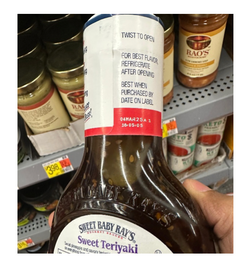 Unclear dates due to printing format emphasized the importance of information chunking and visual hierarchy in facilitating comprehension and recall. |
Design Solutions


Challenges & Limitations
-
Single-Location Focus: The study was conducted at a single Walmart location in Ames, Iowa, which may limit the generalizability of our findings to a broader population. A more comprehensive understanding would require data from diverse locations and demographics.
-
Limited Demographic Representation: The sample size of 25 participants may not fully capture the variability in consumer behaviors.
-
Setting in Controlled Experiments: Participants may have been more attentive or focused than typical shoppers due to the experimental nature, potentially influencing their behaviors and responses.
-
Short Duration of Field Study: The one-week duration of the field study might not have captured long-term trends or variations in consumer behavior.
-
Variability in Product Types: The diversity of products on the market is extensive, and certain product categories or packaging types may present unique challenges that were not fully explored in this study.
-
External Factors and Trends: Consumer behaviors are influenced by external factors and evolving trends, such as technological advancements or changes in regulatory practices. Our study's findings reflect a specific point in time, and continuous monitoring and research are necessary to stay abreast of emerging influences on expiration date label perceptions.
Next Steps
01.
Expand Sample Diversity: Conduct additional studies in diverse locations with varied demographics to enhance the generalizability of findings and capture a broader range of consumer behaviors.
02.
Increase Sample Size: Increase the sample size beyond 25 participants to better represent the variability in consumer behaviors across different demographics.
03.
Replicate Experiments: Replicate controlled experiments in real-world settings to observe natural consumer behaviors without the potential influence of experimental conditions.
04.
Long-Term Observation: Extend the duration of field studies to capture long-term trends and variations in consumer behavior, providing more comprehensive insights.
05.
Validate Findings:
Validate survey responses through alternative methods such as observational studies or follow-up interviews to minimize the impact of social desirability bias and recall inaccuracies.